
Farrel Dsouza
Farrel Dsouza, a Mumbiker is a passionate biker in the Adventure Segment of Motorcycling. He experienced his first rev on a motorcycle when he was 13 and has never stepped off the gas. Dedicating most weekends to motorcycle riding and maintenance he has been self taught in the art of motorcycling.
And here is what he has to say…
“If you want to be happy for a day, drink.
If you want to be happy for a year, marry.
If you want to be happy for a lifetime, ride a motorcycle.”
Motorcycle Reviews
Call Me 411
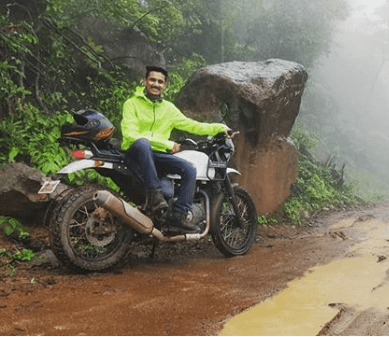
Royal Enfield Himalayan
The Royal Enfield Himalayan isn’t exactly an all-new bike. It has been around since 2016, when Royal Enfield introduced the company’s first adventure-touring motorcycle. The Himalayan also got the first counterbalanced engine on any Royal Enfield, but the first carburetted Himalayan has had its fair share of complaints from owners, particularly about reliability and mechanical issues. Last year, the Royal Enfield Himalayan got two significant updates. First, the Himalayan was introduced with fuel-injection, and late last year, Royal Enfield also introduced dual-channel ABS. And now, we got to spend some time with the new RE Himalayan ABS, to see how much has changed.
What Has Changed, What Hasn’t?
The design and overall silhouette of the Royal Enfield Himalayan remains the same. It’s a love it, or hate it, sort of design. We like the functional, and almost industrial, bare-bones design, and it looks built to take on a lot of hard work. The overall design, body panels, cycle parts and even the engine remain the same. The engine also remains the same 411 cc, air-cooled engine, which puts out 24.5 bhp of power at 6,500 rpm and 32 Nm of peak torque at 4,250 rpm.
The chassis, suspension, wheels and tyres also remain the same, as do the instrument panel and lights. But what has changed as mentioned earlier, is that the Himalayan now gets fuel-injection and standard dual-channel ABS. Those are the only changes, but they have made the bike feel different; the throttle response has improved, and so has stopping power, but we’ll get to that in some more detail.
Anyone Said Coffee??
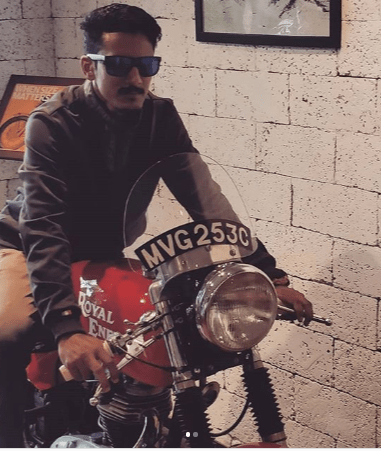
RE Cafe Racer GT Continental
The thing with some cultures is that they never die. They may fade out for a while, and the followers may dwindle down to insignificant numbers, but they come back when someone makes a concerted effort to revive them. The Café Racing culture is one of them.
“Never judge a book by its cover.”
That age-old proverb was pounded into us as kids during elementary school, but it’s one that certainly has proven its merit time and again in real life. Especially in the motorcycle world; a continuing obsession with spec-chart numbers or internet rumors often provokes many to write off a particular model without ever having so much as looking at it in the flesh. And it’s a mistake that some are likely make with the new 650 twins from Royal Enfield.
Having gained notoriety abroad up to this point with three 500cc single-cylinder bikes (the vintage-styled Classic, the more conventional Bullet, and the adventure-tour Himalayan), Royal Enfield is now taking the next step up with two all-new twin-cylinder machines | the cafe-racer-styled Continental GT 650 (tested here) and the classic Interceptor 650. These two middleweight motorcycles are not intended to be competition for other bikes with similar displacements and/or styling; the company is looking at these two machines as filling an entry-bike void in the US market. One where the terms “inexpensive,” “simple,” and “fun” coexist with “cool” and “user-friendly.” “We’re not looking to take market share from anyone,” RE CEO Siddartha Lal said, “We are here to grow the market by creating our own category.”
Definitely Male
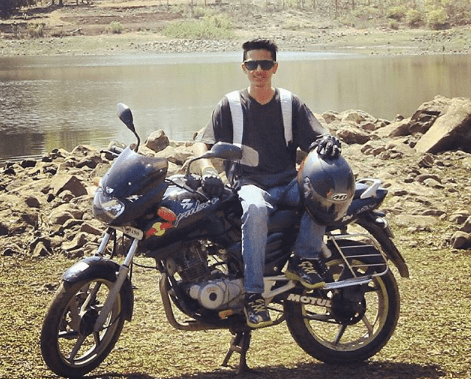
Bajaj Pulsar 150
Indeed it is, How can I say this ? because I own pulsar 150 from past 14 years.
You will see a lot of people complaining that bajaj’s bikes are not durable and wear out soon. This is not at all true.
Regular service makes your bike healthy. I have never skipped/delayed any service till now and my bike is pretty much new till now even after 14 years.
I am very satisfied with the bajaj service centre . They have got experienced staff and cheap cost for all the parts. It saves some bucks.
It looks like a beast but actually tame. It is cheap to maintain, Quiet, Sober, Classy and Comfortable. Spares are available at every parts shop, any mechanic can fix your bike in case of a problem. Its zippy on the streets and gives u short bursts of acceleration when needed and has no problem cruising on highways at 70–90kph for hours. Its a super fun bike to ride and complete bang for your buck.
Absolute German BMW R75 (1975)
Vintage Review
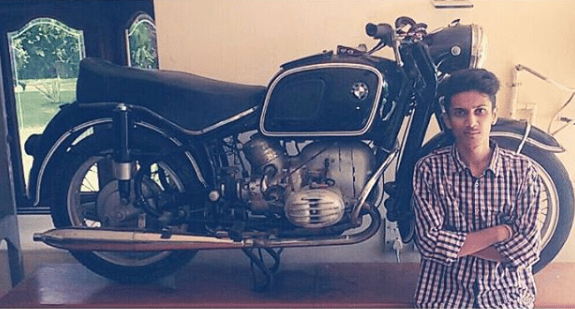
The first motorcycle to bear the BMWname was the R32, with its signature opposed flat-twin engine layout from the company’s chief engineer of the time, Max Friz. With a near-100kph top speed, the R32 set the tone for future generations of BMW’s boxer-twins all the way back in 1923. Fast forward almost 50 years later to Spandau, Germany, 1974, and the /6 series of BMW’s ‘R’ series commenced production. The /6 series meant the introduction of the front disc brake and the elimination of the kick-starter.
With its boxy 18-litre tank and low-slung stance, this was what a typical sports touring machine looked like in the ’70s. While the side silhouette of the motorcycle has a distinct vintage look to it, a slightly different angle will reveal its unique boxer-twin engine layout; and boy does that make you want to stare. Sitting ostentatiously under the tank is the single engine and gearbox unit with the opposed cylinder heads protruding from either side of the motorcycle. On the engine casing, proudly sits the original metal plate with the ‘BMW R75/6’ badging.
At the heart of the R75/6 is a 745cc, opposed twin-cylinder, four-stroke, air-cooled engine. And although, at first, the design seems awkward and more of a novelty concept, having the cylinders sticking out of the sides of the motorcycle actually has quite a few benefits over a conventional V-Twin or single-cylinder engine. Firstly, the cylinders tend to have better cooling. The centre of gravity also happens to be lower, which results in improved handling. And another brilliant part of this engine lies concealed within it; this design allows for the camshaft to be mounted under the crankshaft for improved lubrication. The cylinder heads use hemispherical combustion chambers with pushrod-actuated overhead valves and are fed through dual 32mm Bing Constant Vacuum (CV) carburettors. This specific motorcycle, however, has upgraded carburettors and Wossner racing pistons for increased performance. In its stock form, the R75/6 has an output of 57.3hp and 60Nm of peak torque.
The Flying Flea
WWII
Vintage Review
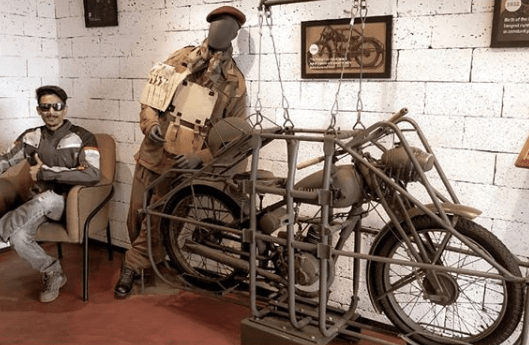
The two-wheeler manufacturer has designed this limited edition motorcycle to pay homage to one of the most famous Royal Enfield motorcycles used in World War II – the two-stroke RE/WD 125. Popularly known as the ‘Flying Flea’, the RE/WD 125 motorcycle was manufactured at the company’s underground facility in Westwood, UK, and the bike served the British paratroopers during World War II.
The lightweight RE/WD 125 motorcycles were air-dropped from aircraft during the war, and used extensively by the then newly formed Parachute Regiment. The Flying Flea bikes were dropped by parachute, encased in a protective steel cradle or carried in Horsa assault gliders. On the ground, the bikes were used for reconnaissance, communications and carrying soldiers into battle.
 Confessions Of A Bike Freak